
Money’s False Promise
Made for LoveHazel’s changing experience of wealth reveals that material abundance cannot guarantee freedom, attention, or connection.
increasing Bearing strength in each event
 decreasing
Bearing strength in each eventdecreasingThe Rescue Fantasy

The Rescue Fantasy
Debt disappears
Hazel sees Byron’s wealth as an escape from student loans, unstable work, and an unwanted return to her parents’ home. She jokes that he has rescued her, and he says she has rescued him.
A bargain she misreads
Her relief makes it difficult to ask what marriage will require. Wealth seems to remove ordinary consequences, but it also draws her into a life whose terms Byron controls.
Luxury Without Movement
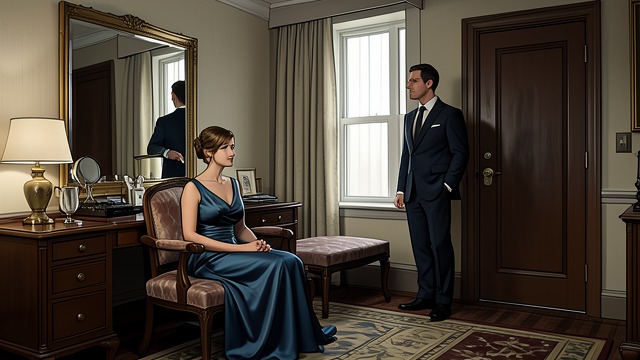
Luxury Without Movement
Abundance inside the compound
Hazel can access expensive objects and travel to impressive places, yet security discourages her from leaving hotel rooms. Purchases become occasions for Byron’s analysis rather than independent pleasure.
Scarcity beneath wealth
She gradually learns that money can purchase comfort while leaving her without privacy, companionship, or choice. The marriage gives her material abundance and a deeper sense of deprivation.
The Unclaimed Settlement

The Unclaimed Settlement
Refusing the money
Hazel does not take the divorce settlement because she believes the funds would let Byron track her activities. What once seemed like security now feels like a leash.
Costly independence
She leaves with no financial cushion and must ask her father for shelter. The decision makes freedom materially precarious but separates her, briefly, from Byron’s resources.
The Pawnshop Complication

The Pawnshop Complication
A hidden value
Hazel takes electronics and the safe to a Gogol resale store, hoping to exchange them for rent money. The clerk identifies the products as embargoed and unusually valuable.
Wealth returns as control
The devices’ value depends on features Gogol does not want circulating publicly. Even when Hazel can get money, the transaction reveals that Byron has marked ordinary possessions with corporate power.
Cash for the Next Year
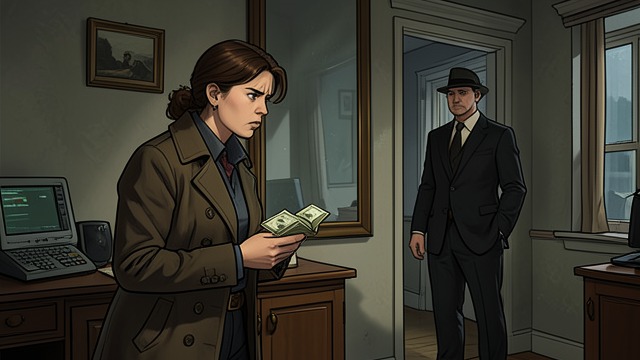
Cash for the Next Year
A fragile resource
Hazel receives cash and uses it to address her father’s rent needs. Money becomes useful not as luxury but as a temporary tool for shelter and choice.
The limit of purchase
The cash cannot free Hazel from the implant or solve her father’s illness. The novel distinguishes the practical value of money from the fantasy that enough wealth can make a person safe.
At Byron’s proposal, six months after they meet
During Hazel’s years at The Hub
The morning Hazel leaves Byron
After Hazel decides to sell Byron’s devices
After Hazel sells the embargoed devices
